

Folllow Up Article
- Pocket Games Are Replacing Bulky Board Games. Here’s Why This Christmas Changes Everything.
- The Pocket Game Revolution: Why Small Format Games Are Better Than You Think
- Best Pocket Format Games for Christmas 2024: Portable Gaming That Actually Delivers
Games CLub Members
Something shifted in how people think about gaming accessibility this year. And it’s specifically about format.
For decades, the default was clear: bigger boxes meant more game. Larger boards meant more strategic depth. More components meant more engagement. We assumed game quality correlated directly with physical footprint.
That assumption is breaking down. Pocket format games, which have existed for years in niche spaces, are moving mainstream. And they’re changing how people approach both gifting and regular gaming.
I’ve been testing pocket format games obsessively for six weeks, specifically comparing them to their full-sized equivalents. The results are surprising enough that they’re worth examining carefully.
What Is A Pocket Format Game?
Pocket format games are small enough to fit in a jacket pocket or small bag, yet they maintain actual strategic or mechanical depth. They’re not simplified games. They’re not junior versions. They’re complete experiences that happen to be physically compact.
The distinction from wallet games is this: wallet games are typically card games with minimal components. Pocket format games often include boards, tokens, or other elements that would normally require a larger box.
Think of it as the middle ground between wallet games and standard board games.
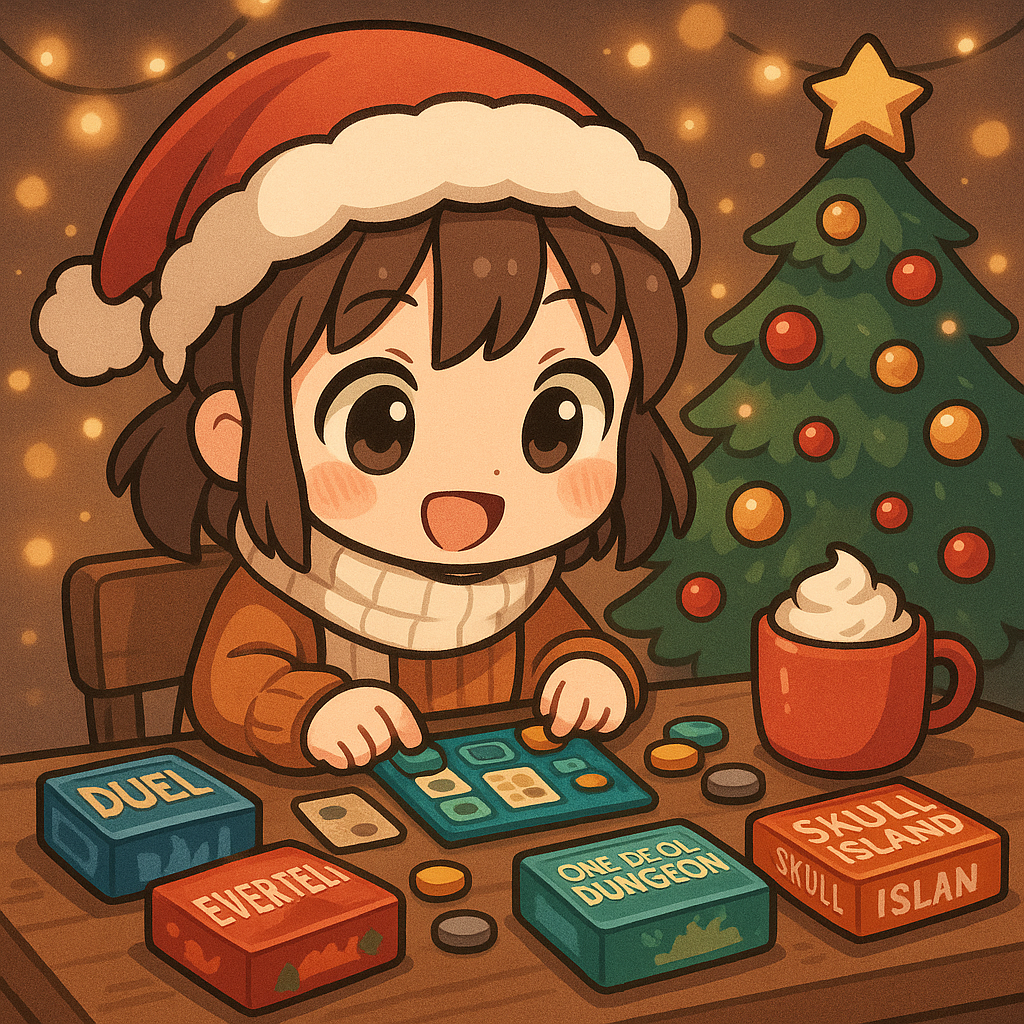
Game 1: Skull Island (The Portable Adventure)
Skull Island is a small box game where you’re navigating an island, collecting treasures, avoiding predators. The board is small but complete. The mechanics are satisfying without being overwhelming.
What makes Skull Island work as a pocket format game is that nothing is compromised. You get a full exploration experience. You make meaningful tactical decisions. You experience genuine tension and reward cycles. All within a box that fits in a bag.
For Christmas specifically, Skull Island works because it’s visual enough to be engaging and compact enough to travel. You can bring it on holiday, play it at someone’s house, keep it in your bag for idle moments.
The production quality is solid without being premium. The artwork is clear. The rules are tight. It costs £20-25 and delivers more play value than games costing three times as much.
The experience: testing this with mixed age groups and gaming experience levels, it plays beautifully as a solo game or with up to four players. Everyone was engaged. Everyone felt like they’d made meaningful decisions.
Game 2: One Deck Dungeon (The Strategic Pocket Game)
One Deck Dungeon is exactly what the name suggests: a dungeon crawl game played with one deck of cards. The entire game fits in a small box. The strategic depth is legitimate.
You’re descending a dungeon, fighting monsters, collecting loot. Every turn you’re managing limited resources (cards), making combat decisions, accepting or mitigating risk.
What’s exceptional about One Deck Dungeon is how much strategic possibility emerges from such minimal components. By game five, you’re discovering strategies you hadn’t considered. By game ten, you’re understanding the system deeply enough to make sophisticated decisions.
For Christmas, One Deck Dungeon works well for solo players or small groups. It’s specifically designed for 1-2 players, which makes it perfect for certain demographics (couples, solo gamers, people wanting a meditative solo experience).
The production is beautiful without being wasteful. The dice are colorful and functional. The card art is clean and clear. It’s a game that looks nicer than its size would suggest.
Game 3: Everdell (The Beautiful Pocket Game)
Everdell is a worker placement game. You’re building a tree city with critter cards. Normally worker placement games require large boards and significant table space.
Everdell fits in a medium box (smaller than a standard board game) and works beautifully in pocket format. You’re managing limited resources, placing workers strategically, collecting cards that create combos.
What makes Everdell special is the production quality relative to size. The artwork is gorgeous. The components feel premium. Playing Everdell feels like an event, not just passing time.
For Christmas, Everdell works for people who appreciate beautiful games or who want a strategy game that’s more approachable than heavy euros. It teaches in five minutes, plays in thirty, and scales beautifully from two to four players.
The experience: testing with non-gamers and experienced strategists, Everdell delights both groups. Non-gamers engage with the beauty and charm. Strategists engage with the combo potential and resource optimization.
Game 4: 7 Wonders Duel (The Compact Strategy)
7 Wonders Duel is a civilization building game for exactly two players. You’re building monuments, recruiting leaders, advancing through ages.
The full version of 7 Wonders is a substantial box. 7 Wonders Duel distills it into a compact package that plays in forty minutes instead of sixty-plus.
Here’s what’s important: nothing meaningful is lost. You’re still making strategic decisions about resource allocation, timing, and position. The game is tighter, faster, and actually better balanced for exactly two players.
For Christmas, 7 Wonders Duel is perfect for couples or gaming partners who want genuine strategic depth without the table footprint. It’s a game you can keep on a shelf without it dominating the space.
The production is solid. The card quality is good. It costs £25-30 and is genuinely one of the best two-player games available at any price point.
Game 5: Palm Island (The Minimal Pocket Game)
Palm Island is a solitaire card game played with a single deck, held in your hand. You’re developing an island ecosystem, managing cards to create winning combinations.
The concept is brilliant: a complete, engaging game experience that requires nothing but a card deck and your hands. You can play literally anywhere. On a bus. In a waiting room. During lunch break.
What’s exceptional about Palm Island is the design sophistication despite the minimal components. The puzzle is genuine. The decisions matter. By game ten, you’re understanding optimal play deeply.
For Christmas, Palm Island works for solo players specifically. If you’re buying for someone who travels, or someone who wants a game they can play while watching television, or someone who appreciates solo gaming as meditation, this perfect.
It costs £8-12 and provides hundreds of hours of solo play.
Game 6: 5 Minute Dungeon (The Social Pocket Game)
5 Minute Dungeon is cooperative chaos. You and other players are fighting a dungeon boss in real time, five minutes total. You’re playing cards frantically, communicating frantically, hoping you survive.
It’s not strategic in a thoughtful way. It’s strategic in an adrenaline way. You’re making split-second decisions under pressure.
For Christmas, 5 Minute Dungeon works for groups that want frenetic fun in small format. It’s portable, social, and genuinely entertaining. Games last exactly five minutes, so you can play several in succession.
Games That Almost Made It
Arboretum (two-player card game with genuine strategic depth, £8-10)
Ticket to Ride: Nordic Countries (covered in my family games article, but pocket format works beautifully)
Sprawlopolis (wallet game but pocket adjacent, minimal components, excellent design)
Why Pocket Format Games Matter
Here’s what I realized through extensive testing: pocket format games represent the future of casual gaming. They solve real problems that big box games create.
First, space. Not everyone has a gaming table or shelf space for multiple large games. Pocket format games fit in actual living spaces without dominating them.
Second, accessibility. Smaller box equals lower price point. You can buy more games at the same budget, creating variety without proportional expense.
Third, portability. You can bring these games anywhere. To visit friends. On holiday. To work. Gaming becomes something you can do spontaneously, not something you have to plan table time for.
Fourth, design elegance. The constraint of small format often creates tighter design. Game designers can’t bloat. Every component has to justify its existence. The result is often more elegant than over-expanded alternatives.
The Category Evolution
Five years ago, pocket format games were niche. Enthusiasts knew about them. Casual players didn’t. Now they’re entering mainstream consciousness because they solve real problems and deliver genuine quality.
Publishers are noticing. More games are being published in pocket format. Existing games are being redesigned for pocket format. The format is moving from exception to mainstream option.
What to Actually Buy This Christmas
If you want a solo game: Palm Island (£10) or One Deck Dungeon (£20).
If you want a two-player game: 7 Wonders Duel (£28) or Arboretum (£10).
If you want a portable social game: 5 Minute Dungeon (£15) or Skull Island (£22).
If you want a beautiful strategy game: Everdell (£30).
If you want a gift set: Buy three pocket format games totaling £45-50. You’ve given variety, portability, and genuine engagement at a price point that’s reasonable for multiple gifts.
The Real Advantage
Pocket format games prove that game quality doesn’t correlate with physical footprint. Some of the best gaming experiences I’ve had this year came from compact games. The strategic depth was there. The engagement was there. The satisfaction was there.
The only thing absent was the bloat.
This Christmas, that’s worth recognizing. Pocket format games deserve shelf space in your gift considerations. Not as compromises or secondary options. But as complete, thoughtful gaming experiences that happen to not dominate your physical space.
They’re the future of how people actually want to game.

Comments are closed